Smart Light Switch: A Simple Efficiency Upgrade for a Greener Home
A smart light switch can help reduce wasted lighting in your home, but it does not save energy on its own. The real value comes from what it makes easier: scheduling lights to turn off automatically, shutting them off remotely, and building routines that match how you actually live. This article explains what a smart switch does, where it helps most, and how to decide if it is the right upgrade for your home.
Why a Smart Light Switch Can Be a Small Upgrade With Real Everyday Payoff
Most lighting waste is not dramatic. It is the hallway light left on all afternoon. The bathroom light running while everyone is in the living room. The porch light that stays on until noon because no one remembered to turn it off.
A smart light switch does not fix those problems by being smart. It fixes them by making it easier to set a schedule, check the status from your phone, or build a simple routine that handles the light for you.
That is the real payoff. Not magic efficiency. Better control over something you were probably already losing track of.
For a greener home, that matters. Reducing wasted energy is one of the most straightforward ways to lower your footprint without spending a lot or changing your life. A smart switch is a practical tool for doing that, room by room, habit by habit.
The savings are modest for most households. But the convenience is real, and the behavior change it supports tends to stick because you are not relying on memory.
What a Smart Light Switch Actually Controls and Why That Matters
A smart light switch replaces the physical switch on your wall. It controls power at the switch level, which means it works with whatever bulbs are already in the fixture.
This is different from a smart bulb, which replaces the bulb itself and needs the switch to stay in the on position to function.
Because a smart switch controls the circuit, it works with hardwired fixtures like ceiling lights, bathroom vanities, recessed lighting, and ceiling fans with light kits. You are not limited to lamps or plug-in fixtures.
Most smart switches offer three core functions.
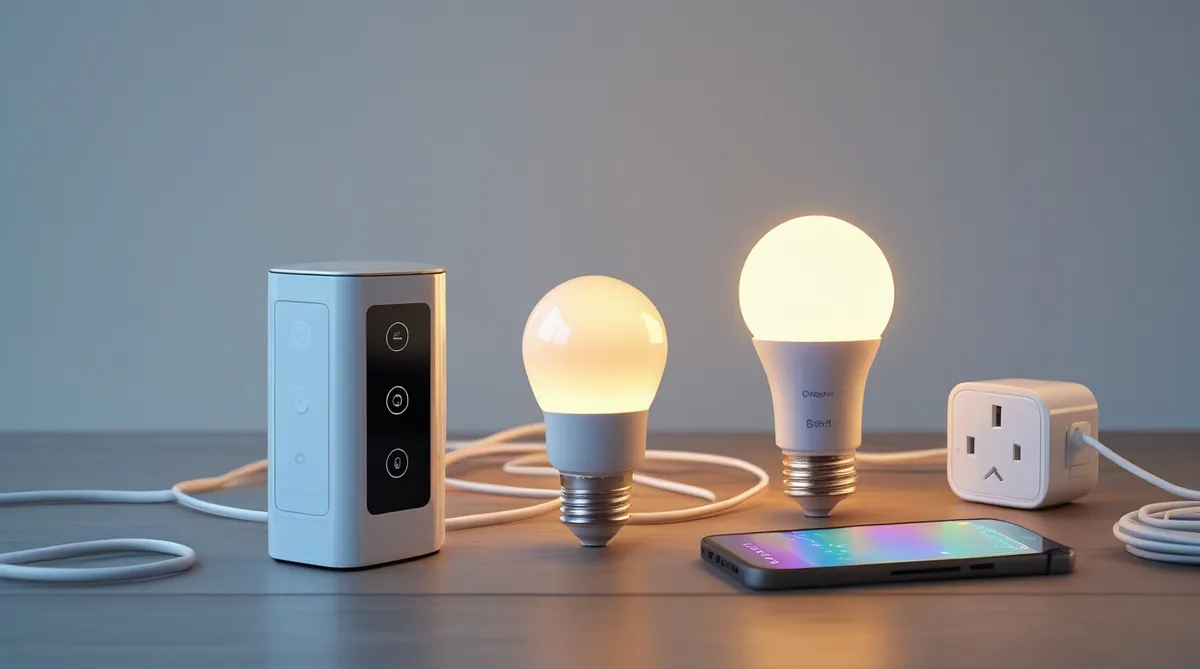
On and off control, which you can operate from a wall tap, a phone app, or a voice assistant.
Scheduling, which lets you set lights to turn on or off at specific times without thinking about it.
Dimming, on models that support it, which can reduce energy use when full brightness is not needed.
Dimming is worth noting separately. Running a dimmable light at 70 percent brightness uses less power than running it at full brightness. That adds up in rooms where you use lights for long stretches. Not every smart switch supports dimming, and not every bulb is compatible with every dimmer, so it is worth checking before you buy.
Where the Savings Really Come From
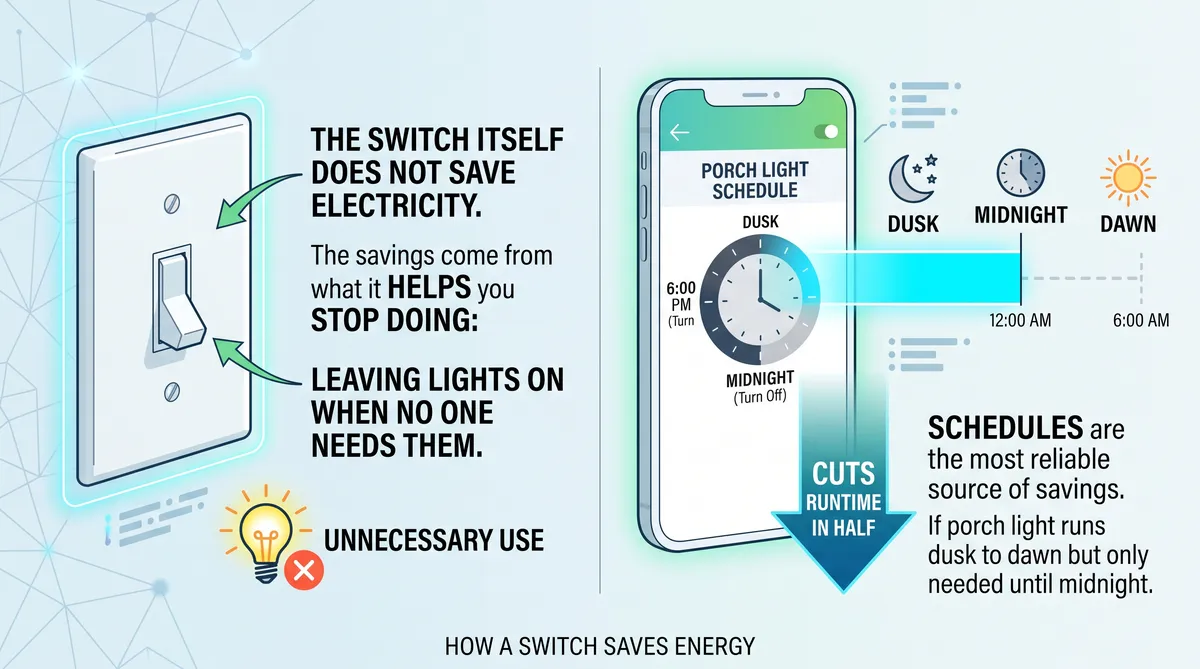
The switch itself does not use less electricity than a standard switch. The savings come from what the switch helps you stop doing: leaving lights on when no one needs them.
Schedules are the most reliable source of savings. If your porch light runs from dusk to dawn every night but you only need it until midnight, a schedule cuts that runtime roughly in half. That is a straightforward reduction with no ongoing effort required.
Remote shutoff is useful when you are away from home and realize a light was left on. Instead of letting it run all day, you can turn it off from your phone. This is a small win per incident, but it removes a source of waste that most households experience regularly.
Routines and automation can go further. A routine might turn off all the lights in a specific zone when you leave the house, or dim the living room lights after 9 p.m. automatically. These routines work best when they match real patterns in your household rather than being set up once and forgotten.
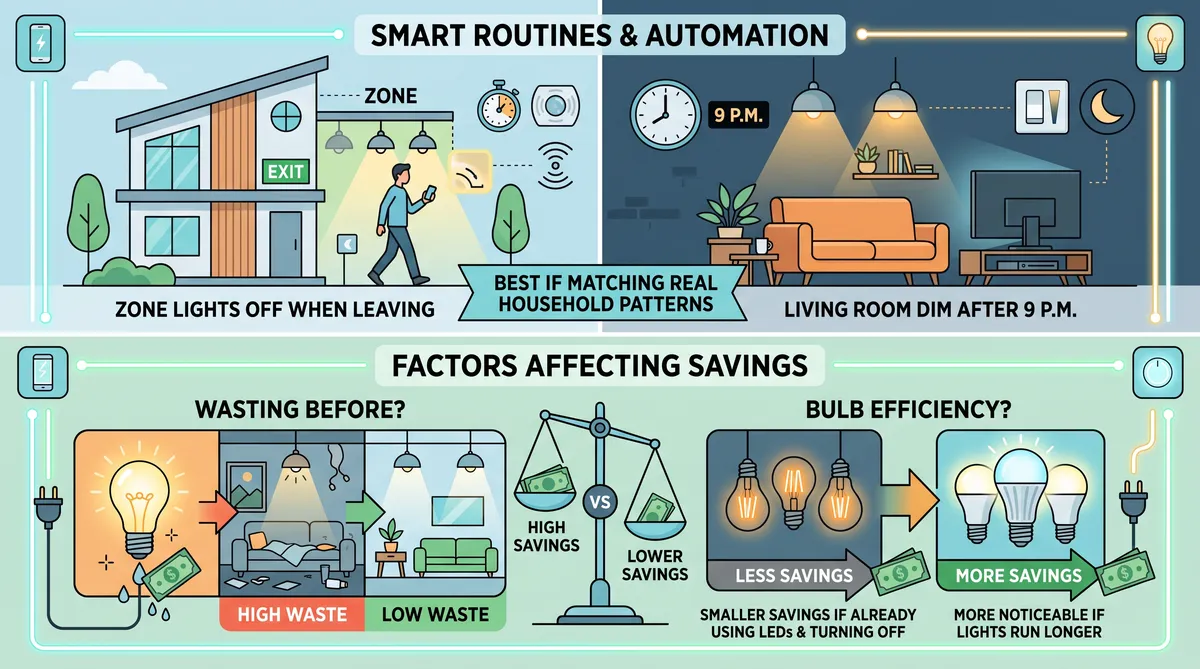
How much you save depends on two things: how much lighting you were wasting before, and how well your existing bulbs convert electricity to light. If your home already uses LED bulbs and you are reasonably good about turning lights off, the savings from a smart switch will be smaller. If you have rooms with lights that run longer than they need to, the savings will be more noticeable.
Where a Smart Light Switch Helps Most and Where It Does Very Little
Best-fit rooms and patterns
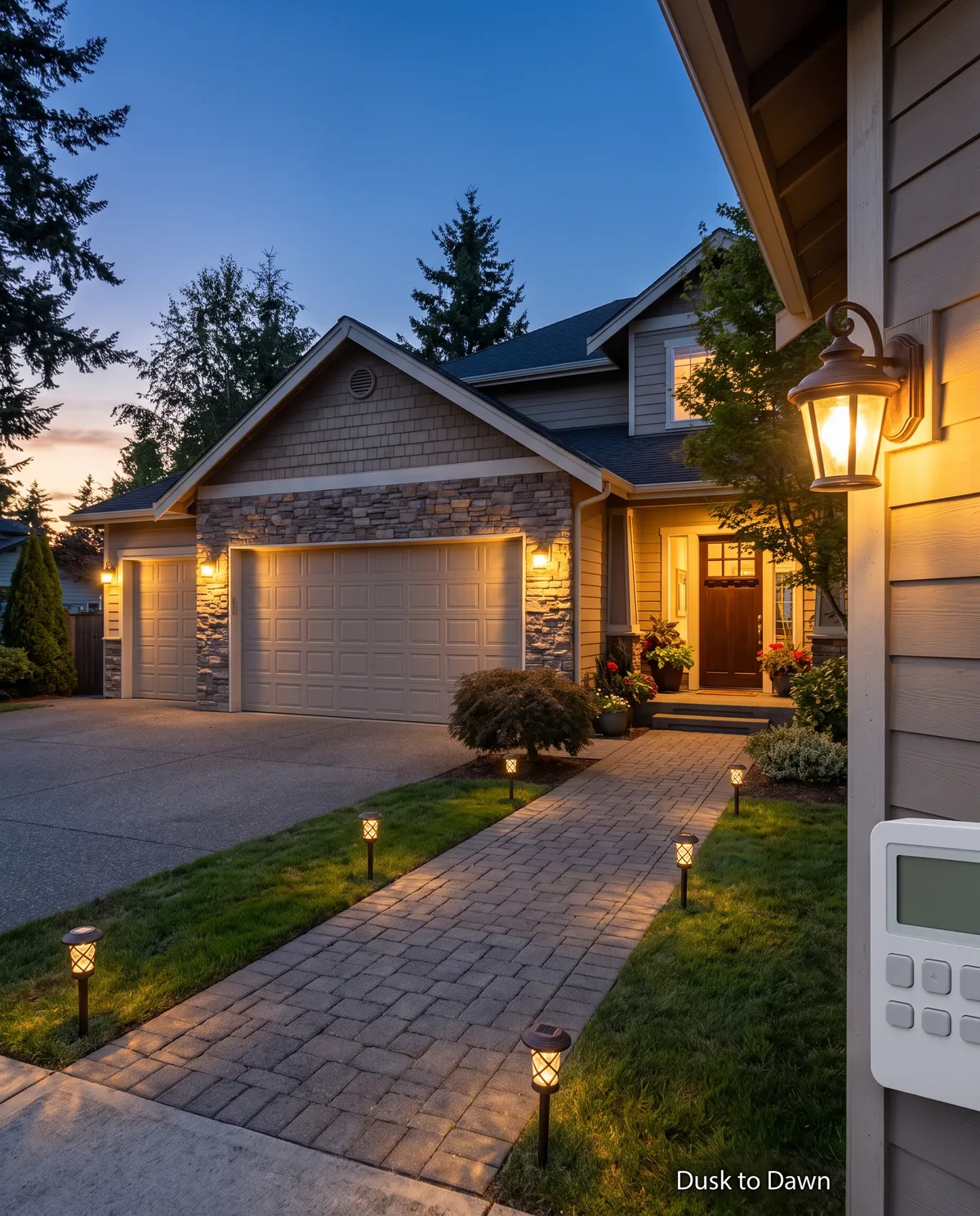
Rooms where lights are frequently left on by accident are the best candidates. Hallways, bathrooms, laundry rooms, garages, and outdoor fixtures are common examples. These are spaces where people pass through, flip a switch, and move on without thinking about whether the light is still running.
Outdoor lighting is a particularly good fit. Porch lights, pathway lights, and garage lights often run longer than needed. A schedule or a dusk-to-dawn automation can handle them without any daily attention.
Rooms where you want consistent routines also benefit. A bedroom where you want lights to dim at a set time, or a home office where you want everything off when you close up for the day, are practical use cases.
Medium-fit cases
Living rooms and kitchens are used at variable times, which makes fixed schedules less reliable. A smart switch can still help through remote shutoff and voice control, but the savings depend more on your habits than on automation.
Low-payoff cases
A room you already use efficiently does not need a smart switch. If you consistently turn lights off when you leave and your bulbs are already LED, adding a smart switch will not move the needle much.
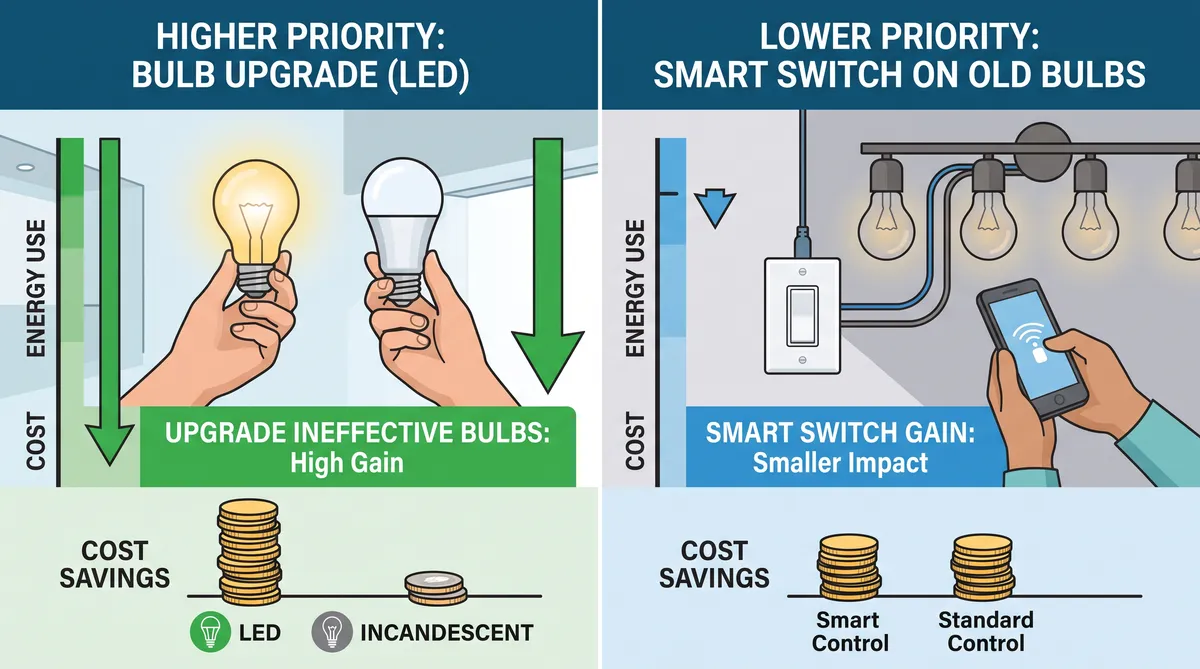
Also, if the main issue is that you have inefficient bulbs, the better first move is replacing the bulbs. A smart switch on a fixture with old incandescent bulbs is a smaller gain than simply switching to LEDs. In that case, the bulb upgrade is the higher-priority step.
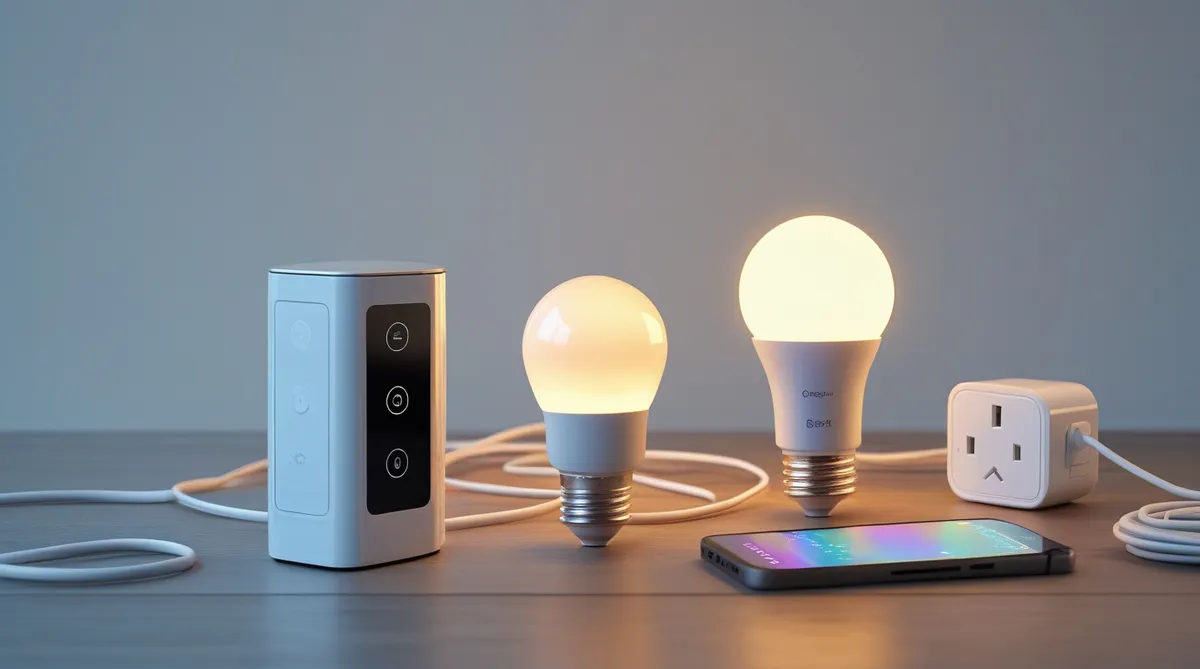
Smart Light Switch vs Smart Bulb vs Smart Plug
These three products solve similar problems in different ways. Choosing the right one depends on your situation.
When a smart switch is the best fit
A smart switch makes the most sense when you want to control a hardwired fixture, keep the wall switch functional for everyone in the household, and not worry about someone accidentally cutting power to a smart bulb by flipping the switch off. It is also the cleaner long-term solution for rooms you plan to use for years.
When a smart bulb is the better fit
A smart bulb works well when you want color control or tunable white light, when you are renting and cannot replace the switch, or when you want to upgrade a single lamp without any wiring. The tradeoff is that the wall switch must stay on for the bulb to receive app or voice commands. This can be confusing for guests or other household members who reach for the switch out of habit.
When a smart plug is better
A smart plug is the most renter-friendly option. It plugs into a standard outlet and gives you scheduling and remote control for any lamp or plug-in device. No wiring, no landlord permission needed, and you can take it with you when you move. It does not help with hardwired fixtures, but for lamps and portable lights, it is a practical starting point.
Common setup mistakes
Buying a dimmer switch without confirming the bulbs are dimmable-compatible is a common problem. Installing a smart switch in a three-way setup without buying the correct companion switch is another. And buying a smart bulb for a fixture where the wall switch gets used regularly tends to create frustration quickly.
What to Check Before You Buy or Install One
Homeowner vs renter fit
If you own your home, a smart switch is a reasonable upgrade for fixtures you use regularly. If you rent, replacing a wall switch typically requires landlord approval. In most rental situations, a smart plug or smart bulb is the more practical path.
Neutral wire requirement
Most smart switches require a neutral wire in the wall box to function. Older homes sometimes lack a neutral wire at the switch location. Before buying, turn off the breaker, remove the existing switch, and check whether a neutral wire is present. Some smart switch models are designed to work without a neutral wire, so if yours is missing, look for that specific compatibility.
Single-pole vs three-way
A single-pole switch controls a light from one location. A three-way switch is part of a pair that controls the same light from two locations, such as at the top and bottom of a staircase. Three-way setups require either a compatible smart switch pair or a specific traveler-wire configuration. Not all smart switches support three-way setups, so check the product specs before purchasing.
Dimmer compatibility
If you want dimming, confirm that the switch supports it and that your bulbs are rated as dimmable. LED bulbs vary in how well they work with different dimmers. Some combinations cause flickering or buzzing. Manufacturers often publish compatibility lists, which are worth checking.
DIY-friendly but not always friction-free
Most smart switch installations are straightforward for someone comfortable with basic electrical work. Turning off the breaker, removing the old switch, connecting a few wires, and attaching the new switch is the standard process. That said, wiring configurations vary, and if your box has more wires than expected or you are unsure what you are looking at, it is reasonable to call an electrician for the installation.
FAQs About Smart Light Switches and Energy Savings
Do smart light switches save enough money to be worth it?
For most households, the savings are modest rather than dramatic. The value is clearest when you have rooms where lights run longer than needed, or when you want to build reliable routines without depending on memory. If you are expecting a significant drop in your electricity bill from the switch alone, that expectation is likely too high. If you are looking for a practical tool that reduces waste and adds convenience, the payoff is more realistic.
Do smart light switches use electricity even when the lights are off?
Yes, a small amount. Smart switches stay connected to your home network and draw a small standby current to remain responsive. This is typically a very low draw, often described in the range of a fraction of a watt, though it varies by model. It is worth being aware of, but it is not a meaningful offset against the savings from reduced lighting waste in most cases.
Are smart switches better than smart bulbs for energy efficiency?
Neither is inherently more efficient than the other. The bulb type matters far more than whether the control is at the switch or the bulb. An LED bulb controlled by a smart switch and an LED bulb in a smart bulb fixture use similar amounts of power when on. The practical difference is in control reliability and household usability. A smart switch keeps the wall switch functional for everyone, which tends to make it easier to maintain good habits across a household.
Can renters get similar benefits without replacing the wall switch?
Yes. A smart plug paired with a lamp gives you scheduling and remote shutoff without touching any wiring. A smart bulb in a lamp or fixture with a switch you can leave in the on position gives you similar control with the addition of dimming and sometimes color options. Neither solution covers hardwired ceiling fixtures, but for lamps and portable lighting, renters have practical options that do not require landlord approval.
A smart light switch is not a dramatic efficiency upgrade. It is a practical one. It reduces wasted lighting by making better habits easier to maintain. For the right rooms and the right households, that is a straightforward win worth considering.

Scott LeDuc is a master electrician who writes about practical smart-home upgrades that cut utility bills and reduce waste. Across more than 15 years in renewables, he has personally installed hundreds of energy and automation systems and managed thousands more through his business. He holds Master Electrician licenses in several states and OSHA 10 and 30 training. Find more at seamlesshome.com. Everything he shares is tested in his own home.