What Is SEER in HVAC? How It Affects Energy Costs and How Smart Automation Helps You Save
You've probably seen the word "SEER" on an air conditioner spec sheet or heard it tossed around by an HVAC technician. Maybe you nodded along while quietly wondering what it actually means for your monthly electric bill. Here's the honest answer: SEER is an important efficiency score, but it's not the whole story. A high number on a label doesn't automatically mean lower bills. What actually determines your real-world savings is a combination of your equipment, your home's condition, and — increasingly — how smart your controls are. This article breaks all of that down in plain English, so you can make smarter decisions without needing an engineering degree.
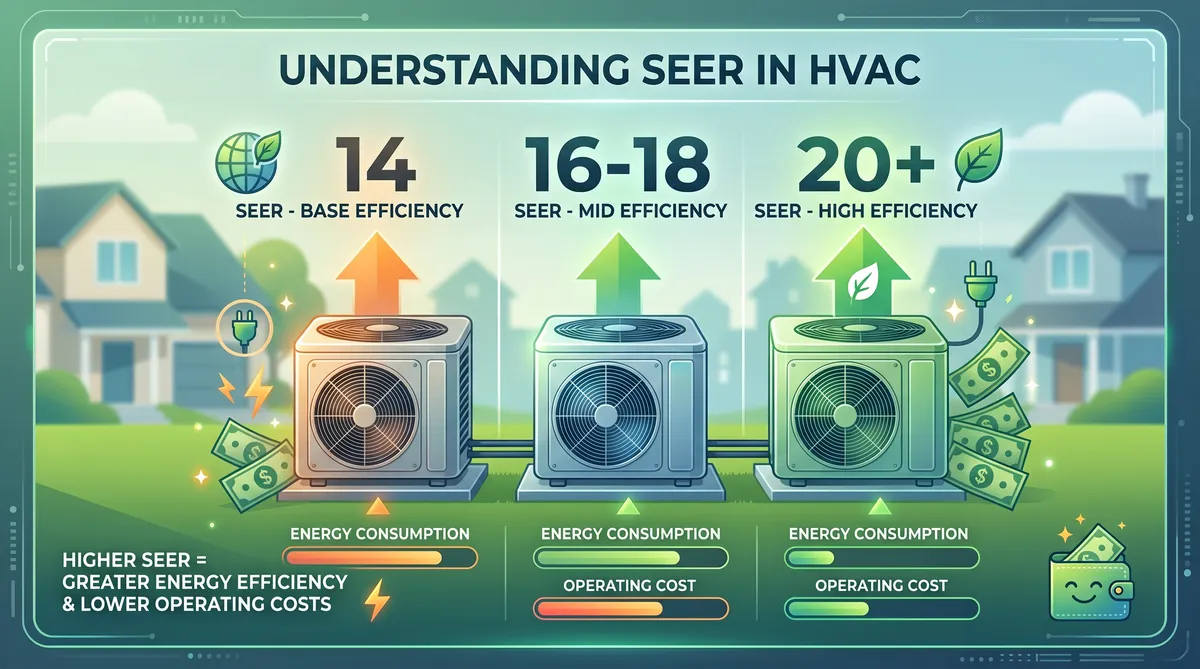
SEER Sets the Savings Potential — Smart Control Helps You Capture It
Think of SEER like the fuel economy rating on a car. A vehicle rated at 40 miles per gallon sounds great on paper, but if you're constantly idling in traffic, accelerating hard, and leaving the engine running while you run errands, you'll never see that number in real life. Your air conditioner works the same way. The SEER rating tells you how efficiently the system *can* perform under ideal conditions. Smart home automation — things like programmable schedules, occupancy sensors, and app-based controls — is what helps you actually live closer to that rated number day after day. There's a real difference between *rated efficiency* and *lived efficiency*, and that gap is where most homeowners quietly lose money.
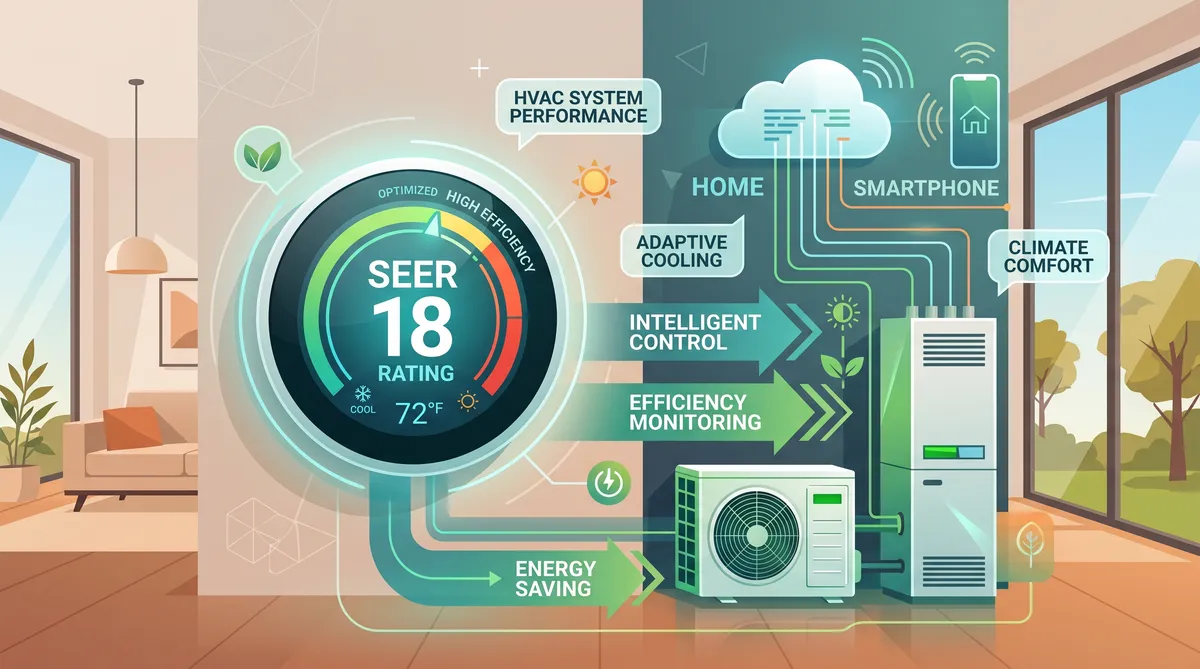
Rated efficiency is what the manufacturer measures in a controlled lab setting. Lived efficiency is what happens in your actual house, with your family's habits, your insulation gaps, your thermostat set to 68 degrees all day while everyone's at work. Smart controls are the bridge between those two realities. They don't perform miracles, but they do help reduce the wasted runtime that quietly inflates your utility bill every single month. That's the core idea this article keeps coming back to, because it's the most practical thing you can actually do something about.
What SEER Actually Measures in an HVAC System
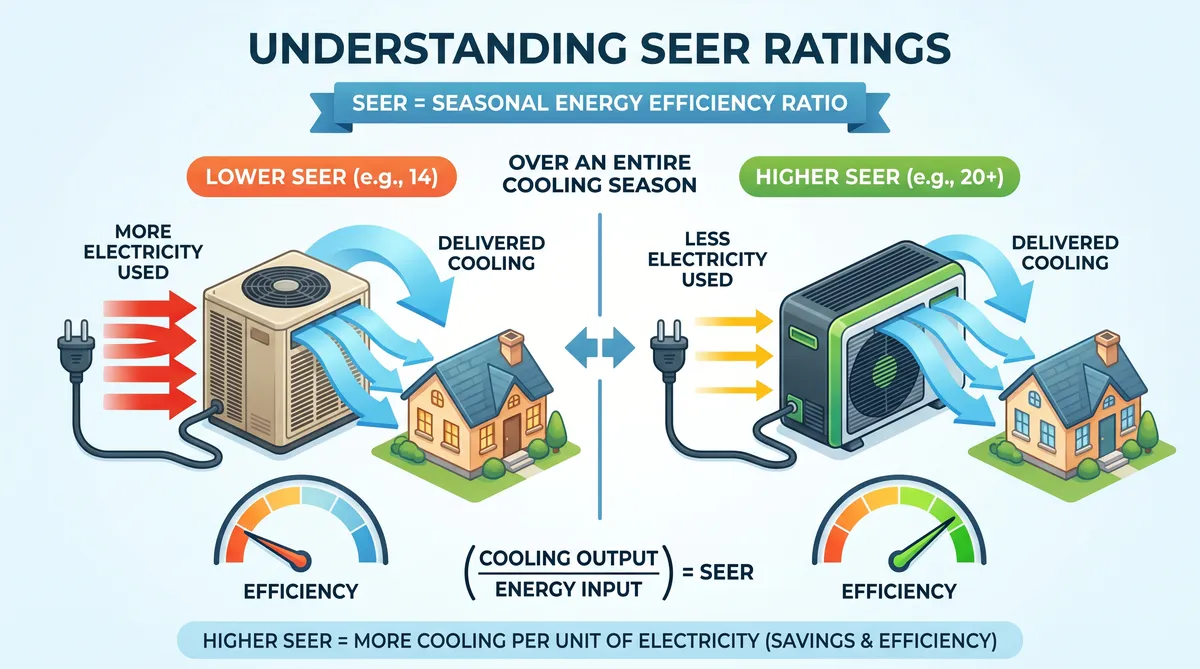
SEER stands for Seasonal Energy Efficiency Ratio. In simple terms, it measures how much cooling your air conditioner delivers over an entire season compared to how much electricity it uses to do it. A higher SEER means the system produces more cooling for every unit of energy consumed. For example, a unit with a SEER rating of 20 is more efficient than one rated at 14 — it does the same job using less electricity.
The U.S. Department of Energy sets minimum SEER standards that vary by region, and as of recent years, those minimums have been rising because more efficient equipment is better for the environment and for homeowners' wallets over time.
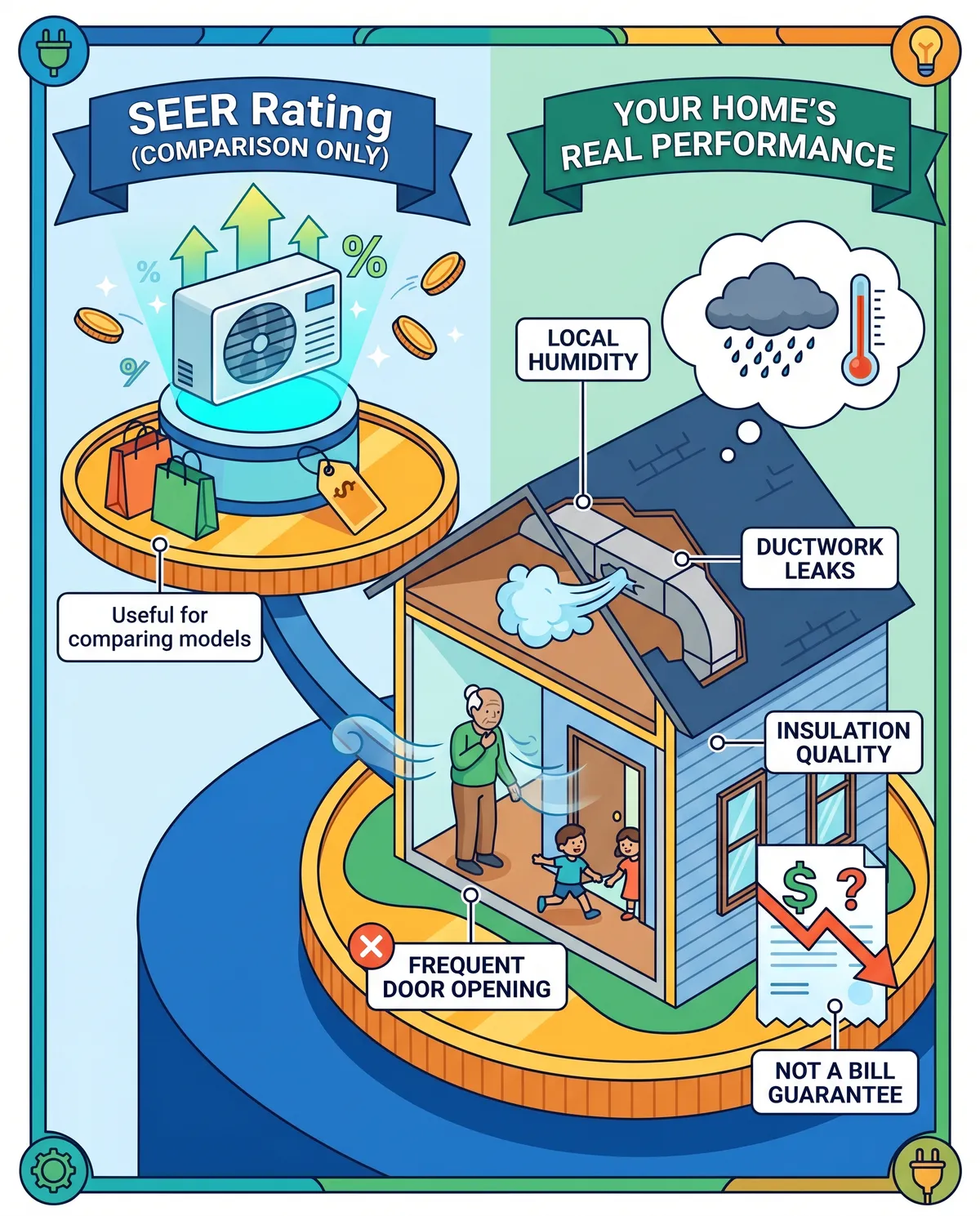
What SEER does *not* tell you is how your system will actually perform in your specific home. It doesn't account for your local climate's humidity, your house's insulation quality, how often your family opens and closes doors, or whether your ductwork is leaking conditioned air into the attic. The rating is a useful comparison tool when you're shopping between systems, but it's not a guarantee of any specific dollar amount on your bill. Treat it as a starting point, not a finish line.
Why Your Real Energy Costs Can Differ From the Rating
Here's where a lot of homeowners get frustrated. They invest in a higher-efficiency system, and their bills don't drop as much as they expected. That's almost never the system's fault — it's usually the environment the system is working in. Thermostat settings play a huge role. If you're cooling your home to 70 degrees around the clock, even the most efficient system will run constantly and rack up costs. Occupancy patterns matter too. A house that's empty from 8 a.m. to 5 p.m. but kept at the same temperature as when everyone's home is burning energy for no reason.
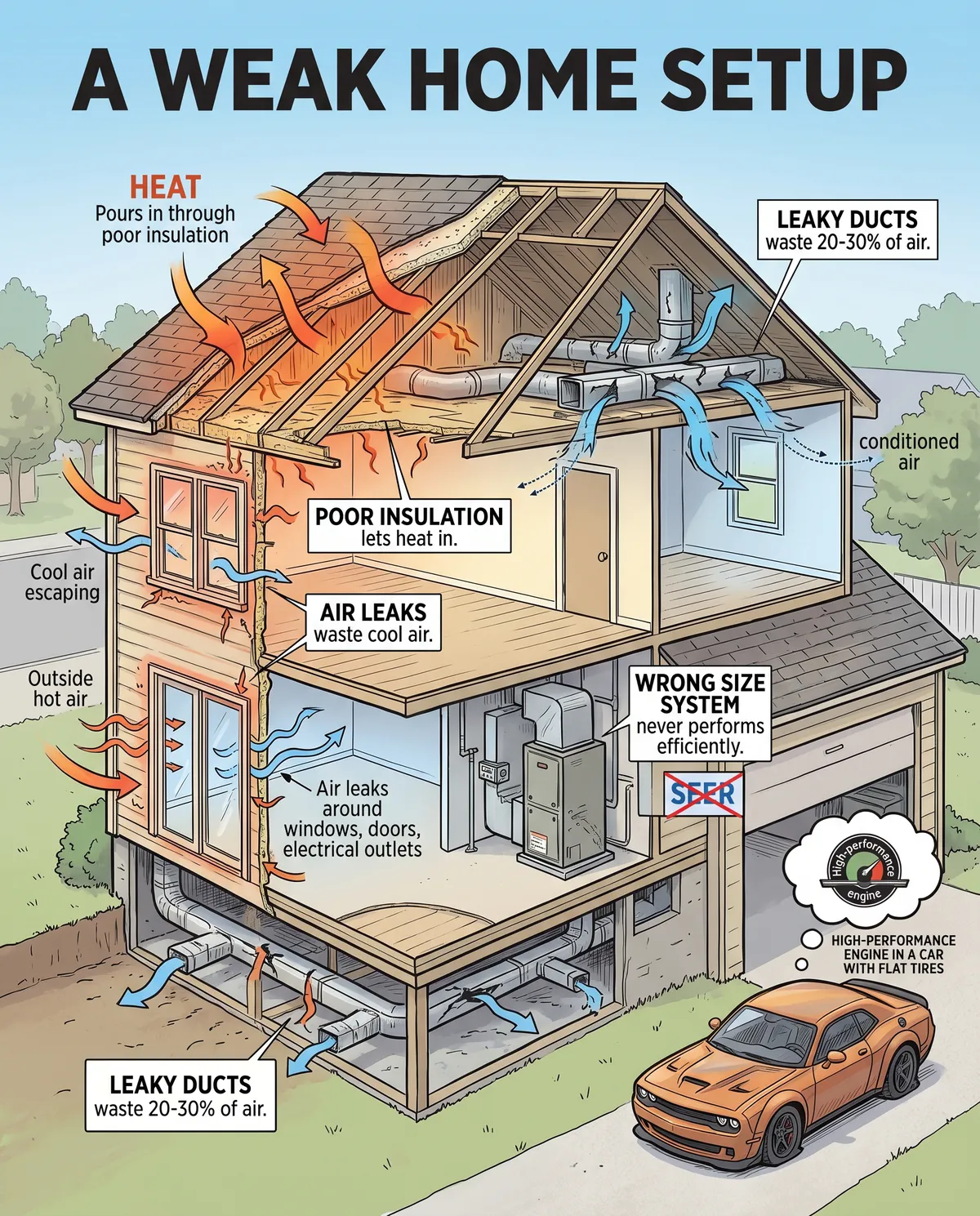
Beyond behavior, the physical condition of your home has a massive impact. Poor insulation lets heat pour in through walls and ceilings, forcing your AC to work overtime. Air leaks around windows, doors, and electrical outlets let cool air escape. Leaky ducts — which are surprisingly common in older homes — can waste 20 to 30 percent of your conditioned air before it ever reaches a room. Clogged air filters make your system work extra hard! And if your system is the wrong size for your home, either too big or too small, it will never perform efficiently regardless of its SEER rating. A strong rating in a weak home setup is like a high-performance engine in a car with flat tires.
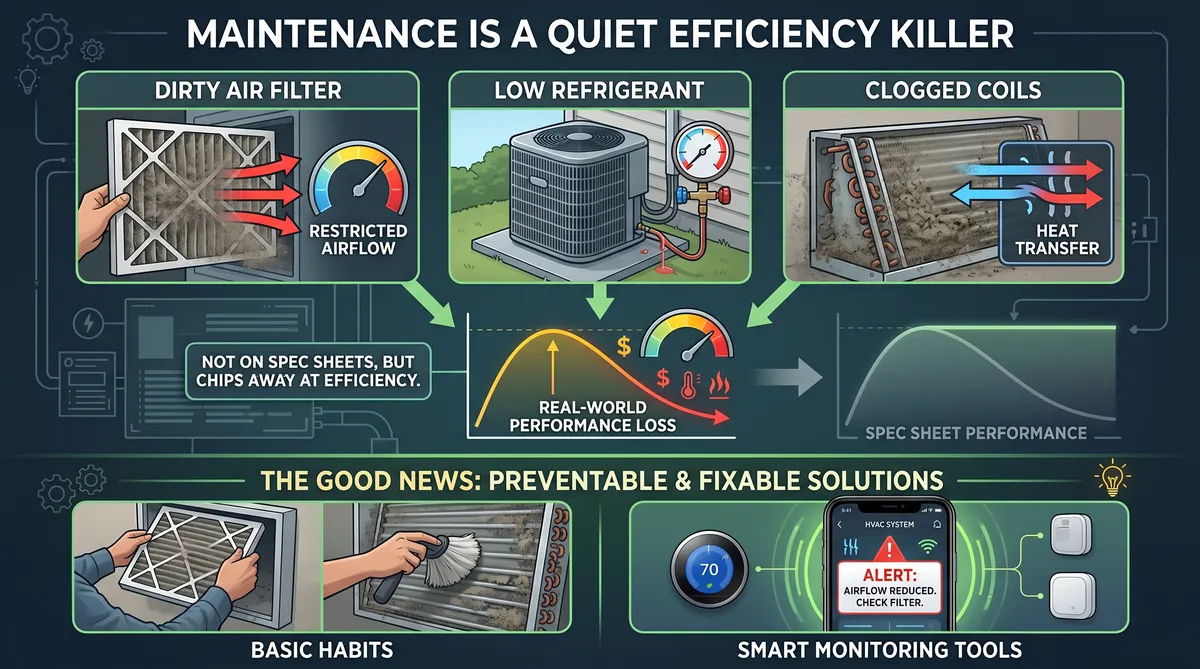
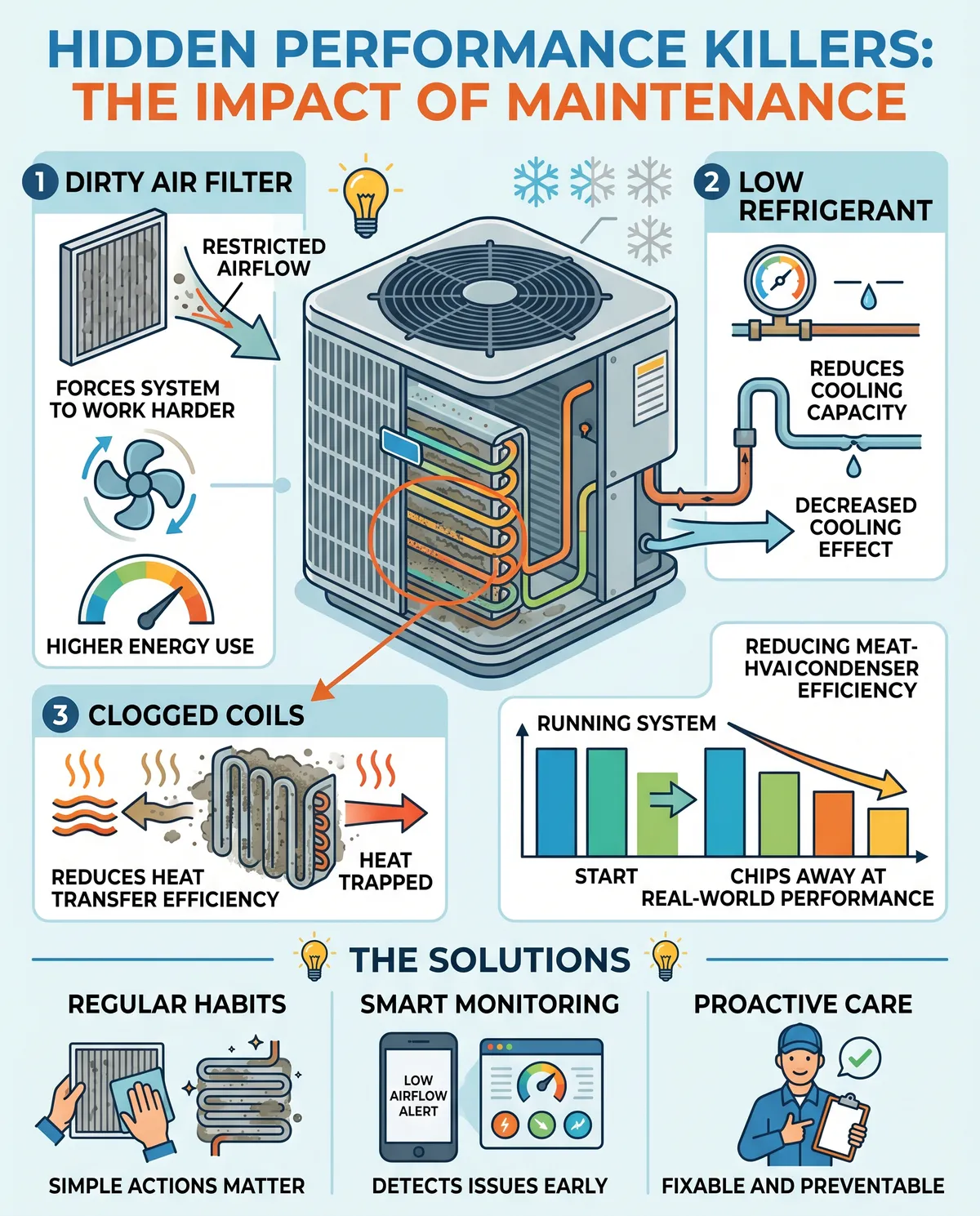
Maintenance is another quiet efficiency killer. A dirty air filter restricts airflow and makes your system work harder. Low refrigerant levels reduce cooling capacity. Coils clogged with dust and debris reduce heat transfer. None of these problems show up on a spec sheet, but all of them chip away at real-world performance. The good news is that most of these issues are fixable, and some of them are preventable with basic habits and — yes — smart monitoring tools that alert you when something seems off.
When Paying for a Higher SEER System Makes Sense
A higher SEER rating comes with a higher upfront price tag, so the real question is whether the long-term savings justify the investment for your specific situation. If you live in a hot climate like the Southeast, Southwest, or anywhere with long, brutal summers, your AC runs for more months of the year. That means more opportunities to benefit from improved efficiency, and a faster payback period on the extra cost. Homeowners who plan to stay in their house for ten or more years also have more time to recoup that investment through lower monthly bills.
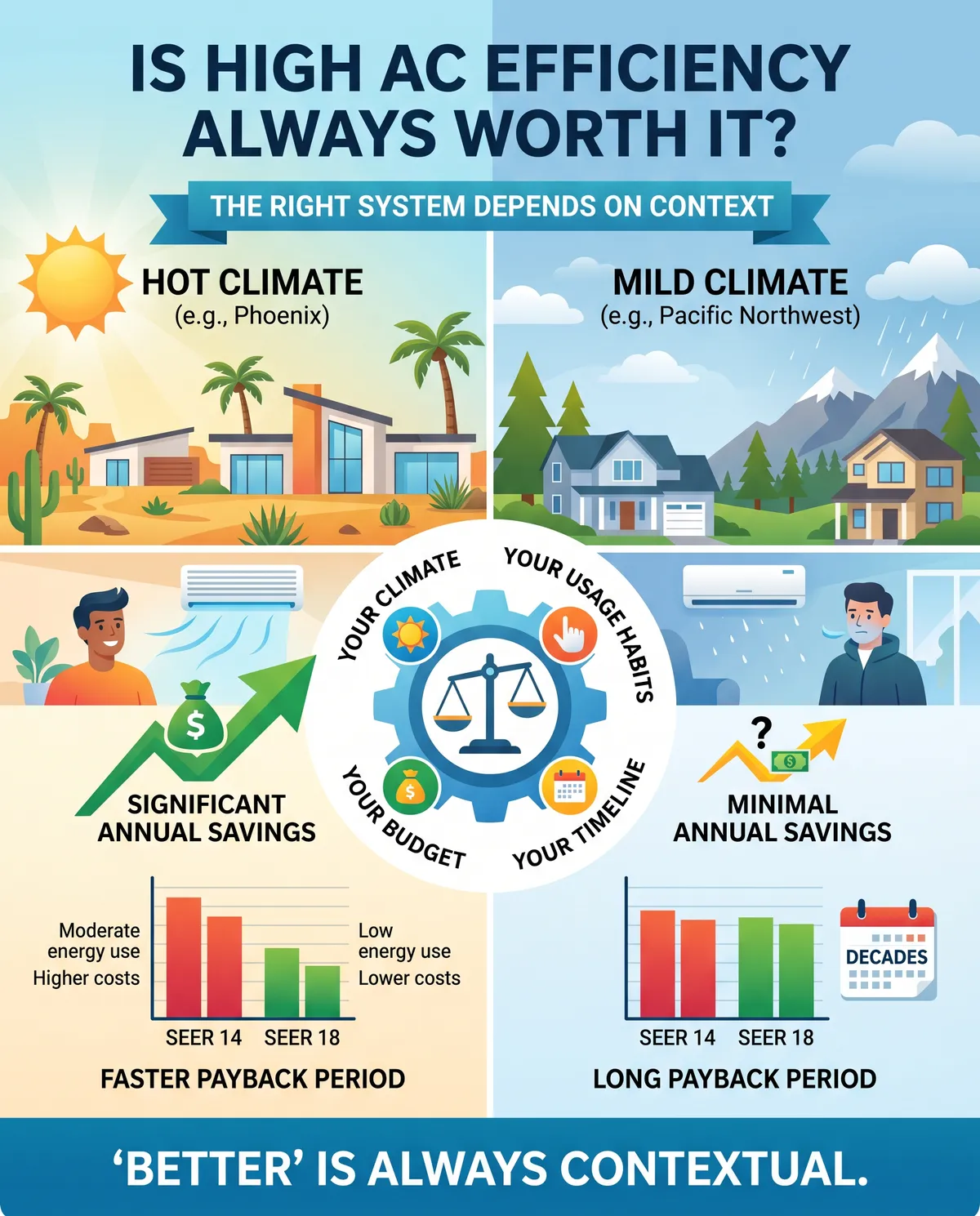
On the other hand, if you live somewhere with mild summers, run your AC only a few months a year, or plan to sell your home in the next few years, the math may not work in your favor. Jumping from a SEER 14 to a SEER 18 system might save you a meaningful amount annually in Phoenix, Arizona, but the same upgrade in a mild Pacific Northwest climate might take decades to pay back. "Better" is always contextual. The right efficiency level depends on your climate, your usage habits, your budget, and your timeline — not on what sounds most impressive on a brochure.
How Smart Automation Helps an Efficient HVAC System Waste Less
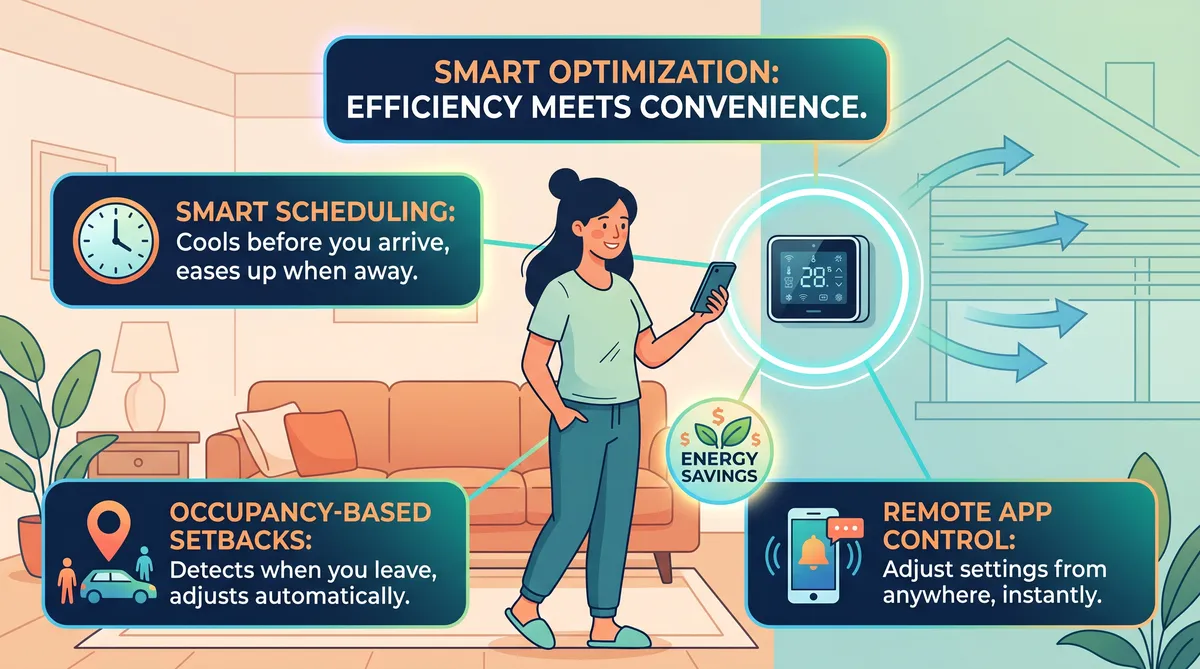
This is where things get genuinely exciting for the tech-curious homeowner. Smart home automation doesn't change the SEER rating of your system, but it can dramatically change how much of that rated efficiency you actually capture. The simplest example is scheduling. A smart thermostat lets you program your AC to ease up during the hours your house is empty and ramp back up before you get home. You're not coming back to a hot house, but you're also not paying to cool an empty building all day. That one change alone can make a noticeable dent in your monthly bill.
Occupancy-based setbacks take it a step further. Some smart thermostats use geofencing — your phone's location — to detect when everyone has left the house and automatically adjust the temperature. Others use motion sensors or learning algorithms that figure out your patterns over time and optimize accordingly. App control means you can make real-time adjustments from anywhere. Forgot to change the thermostat before a long weekend away? Fix it from your phone in thirty seconds. You can also set up alerts that notify you if your system is running unusually long, which can be an early warning sign of a maintenance issue or a door left open somewhere.
It's important to be honest about what smart automation cannot do. It cannot fix bad insulation. It cannot seal leaky ducts. It cannot correct a system that was improperly sized for your home. If your house is losing conditioned air as fast as the system produces it, no amount of scheduling cleverness will solve the problem. Smart controls are a powerful tool for reducing wasted runtime and optimizing good equipment — they are not a substitute for addressing the fundamental physical issues in your home. Think of automation as the finishing layer on top of a solid foundation, not a replacement for it.
How to Choose the Right Efficiency Strategy for Your Home

Before you spend a dollar on new equipment or smart gadgets, start with your current bills and your current comfort. Pull up your electricity bills from the last twelve months and look at the summer months specifically. Is your usage dramatically higher than your neighbors' in similar-sized homes? That's a clue that something is off — and it might be equipment, or it might be the home envelope, or it might be behavior. Walk through your house and feel for drafts near windows and doors. Check your attic insulation. Look at your air filter. These simple observations can tell you a lot about where your biggest efficiency wins are hiding.
If your system is more than fifteen years old and running on a low SEER rating, equipment replacement might genuinely be your best move. If your system is relatively new but your bills are still high, the problem is more likely your home's insulation, air sealing, or duct system — and no new thermostat will fix that. If your equipment and home are in decent shape but you're still running the AC on a rigid old schedule, smart home automation is probably your fastest and most affordable path to real savings. A good smart thermostat costs between $150 and $300, installs in an afternoon, and can pay for itself within a year or two for many households. Ask yourself: what's the actual bottleneck in my home's efficiency? Then address that first.
Putting It All Together
Here's the one thing worth remembering from everything you've just read: a higher SEER rating can improve efficiency, but your actual savings depend on how your system is used, how your home performs, and whether smart controls help reduce wasted runtime. You don't have to tackle everything at once. Start with awareness — understand your current system, your bills, and your home's weak spots. Add smart home automation where it makes sense. Address insulation and air sealing when you can. And when it's time to replace equipment, choose a SEER rating that fits your climate and your timeline, not just the one that sounds most impressive. You have more control over your home's energy use than you might think, and every smart step you take adds up — for your wallet and for the planet.

Scott LeDuc is a master electrician who writes about practical smart-home upgrades that cut utility bills and reduce waste. Across more than 15 years in renewables, he has personally installed hundreds of energy and automation systems and managed thousands more through his business. He holds Master Electrician licenses in several states and OSHA 10 and 30 training. Find more at seamlesshome.com. Everything he shares is tested in his own home.